
Jun 10 / 26
Large Format vs Standard Printers: Which One Should You Choose?
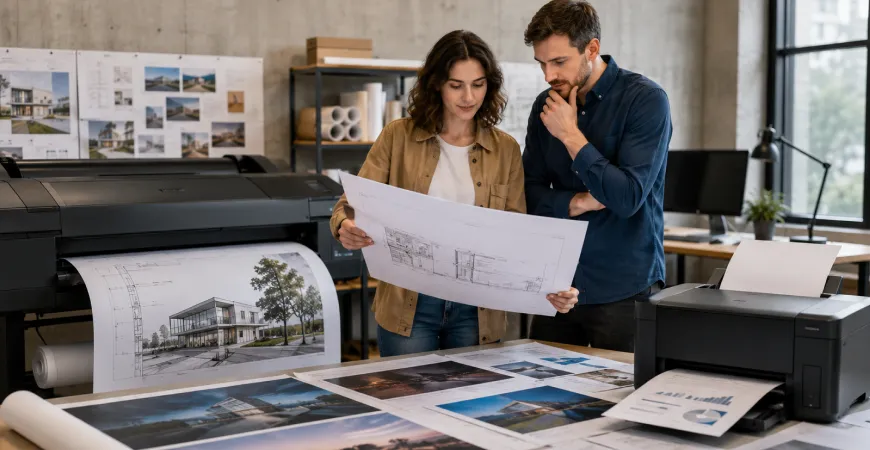
When exploring printer options, one of the most important considerations is the type of documents and materials you plan to print. While standard printers are commonly used in homes, offices, and educational environments, large format printers are designed to handle projects that extend beyond traditional paper sizes. Understanding the differences between these two categories can help buyers identify which option aligns best with their printing requirements.
The decision is not necessarily about selecting the most advanced printer, but rather choosing the technology that supports the intended application. Whether printing everyday documents, business reports, marketing materials, technical drawings, or visual displays, understanding the capabilities of each printer type can make the selection process more straightforward.
Understanding Standard Printers
Standard printers are the most commonly used printing devices across homes and workplaces. These printers are designed to handle everyday document production using widely used paper sizes. They are often selected for tasks such as printing reports, contracts, invoices, assignments, forms, and general office paperwork.
Because standard printers are suitable for routine document management, they are available in various technologies, including inkjet, laser, LED, and multifunction models. Their versatility makes them appropriate for a broad range of environments, from personal workspaces to professional offices.
Many users choose standard printers because they support everyday printing needs while offering features such as wireless connectivity, scanning capabilities, and document management functions.
Understanding Large Format Printers
Large format printers are designed to accommodate printing projects that exceed traditional paper dimensions. Instead of focusing solely on standard document production, these printers support larger materials that require expanded print areas and enhanced visual presentation.
Large format printers are often associated with applications such as posters, banners, architectural drawings, engineering plans, maps, presentations, signage, and marketing displays. Their ability to produce oversized output makes them particularly useful for industries and professionals working with visual communication and technical documentation.
Unlike standard printers, which focus on everyday office and personal printing tasks, large format printers are typically selected for specialized projects where larger print dimensions are essential.
Comparing Printing Applications
One of the easiest ways to understand the difference between large format and standard printers is to examine how they are commonly used.
Standard printers are generally intended for routine printing activities. These may include administrative paperwork, educational materials, internal business documents, invoices, forms, and general correspondence. Their design supports the production of documents that are frequently handled, shared, and stored within standard filing systems.
Large format printers, on the other hand, are often used when visual impact or expanded dimensions are required. Businesses creating promotional materials, designers producing visual presentations, and professionals preparing technical drawings frequently rely on large format printing capabilities.
The intended application often becomes the deciding factor when choosing between these two printer categories.
Paper Size Capabilities
Paper handling represents one of the most significant distinctions between standard and large format printers. Standard printers are built to accommodate commonly used paper sizes found in homes and offices. These formats support most everyday document requirements and are sufficient for the majority of routine printing activities.
Large format printers extend beyond these traditional dimensions and are capable of producing larger prints that would not fit within conventional paper size limitations. This expanded capacity allows users to create visual materials that require additional space for detailed information, graphics, diagrams, and imagery.
Understanding the paper sizes your work requires can significantly simplify the printer selection process.
Workspace Considerations
Printer size and workspace requirements can also influence the decision between standard and large format printing solutions. Standard printers are typically designed to fit comfortably within desks, workstations, home offices, and shared office environments.
Large format printers generally require additional space because they are built to accommodate larger media and more specialized printing tasks. Organizations considering large format printing should evaluate available workspace, accessibility, and operational requirements before making a purchase.
Selecting a printer that fits comfortably within the intended environment can contribute to a more practical and organized workflow.
Evaluating Workflow Requirements
The type of workflow supported by each printer category also differs significantly. Standard printers are commonly integrated into daily document management activities where reports, forms, contracts, and routine paperwork are produced regularly.
Large format printers often support project-based workflows where visual presentations, technical drawings, design materials, and promotional assets play a central role. These projects may require greater attention to layout, scale, and presentation compared to standard document printing.
Understanding how the printer will be incorporated into daily operations can help determine which category is more appropriate for the intended use.
Long-Term Printing Needs
When comparing printer options, it is helpful to consider not only current requirements but also future printing needs. Some users purchase printers based solely on immediate projects, only to discover later that their requirements have changed.
Businesses expanding their marketing activities, design teams working on larger projects, or organizations producing technical documentation may find that large format capabilities become increasingly valuable over time. Conversely, many users may discover that a standard printer fully supports both current and future requirements without the need for additional specialized equipment.
Evaluating long-term objectives can help ensure the selected printer continues to support evolving workflows and printing demands.
Choosing the Right Printer for Your Requirements
The decision between a large format printer and a standard printer ultimately depends on the type of materials you plan to produce. Standard printers are well suited for everyday document management, office paperwork, educational materials, and general business activities. Large format printers are designed for projects requiring oversized output, visual presentations, technical drawings, and specialized print applications.
By carefully assessing printing applications, paper size requirements, workspace considerations, and long-term objectives, buyers can make a more informed decision. Understanding the strengths of each category allows users to focus on printers that align with their specific needs and supports a more effective purchasing process.

Delivery & Shipping
Review available shipping options and estimated delivery information.

Product Guidance
Explore product information and category details across our printer collection.

Secure Checkout
Complete purchases through protected payment processing systems.

Printer Categories
Explore all-in-one, laser, inkjet, LED, and large format printer collections.
Explore Printing Solutions For Every Need
Browse our collection of all-in-one, laser, inkjet, LED, and large format printers.
